The Preschool Room
Long projects, real questions, and a studio that stays open.
- Meadow ratio
- 1 : 7
- 1 educator to 7 children
- Group size
- 14
- children, maximum
- Oregon maximum
- 1 : 10
- group of 20, certified centers
- Staffing
- 2 educators plus a shared atelierista
Regulatory — never recoloured
Three-year-olds ask questions that deserve weeks, not answers. This is where Meadow’s work starts to look like the Reggio schools it is inspired by: a small group follows one question for as long as it holds, and the answer is made rather than told.
Last spring a group in this room spent nine weeks on shadows. It began with someone noticing that the maple’s shadow moved. It ended with a wall of traced outlines, a homemade projector, and a very serious argument about whether shadows are cold.
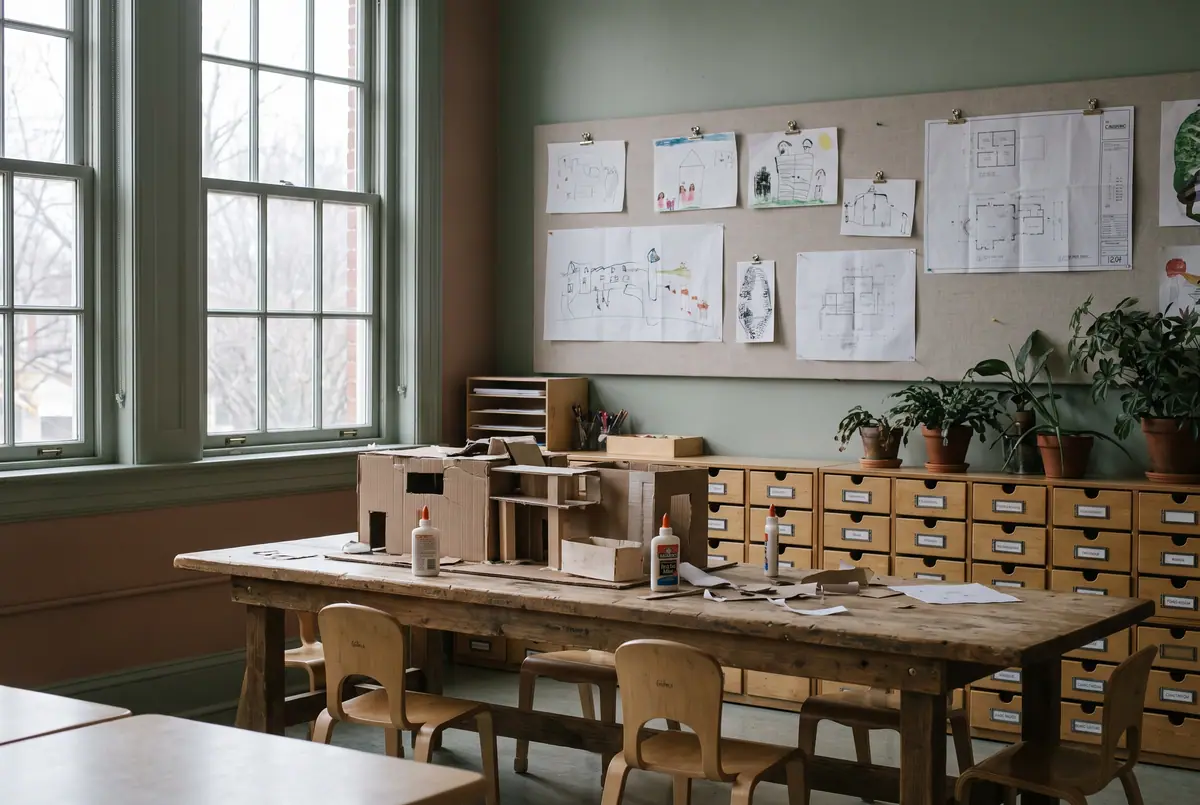
The educators do not run this. They notice it, feed it materials, ask the question that keeps it going, and write down what happens — which is what the panels on the wall are.
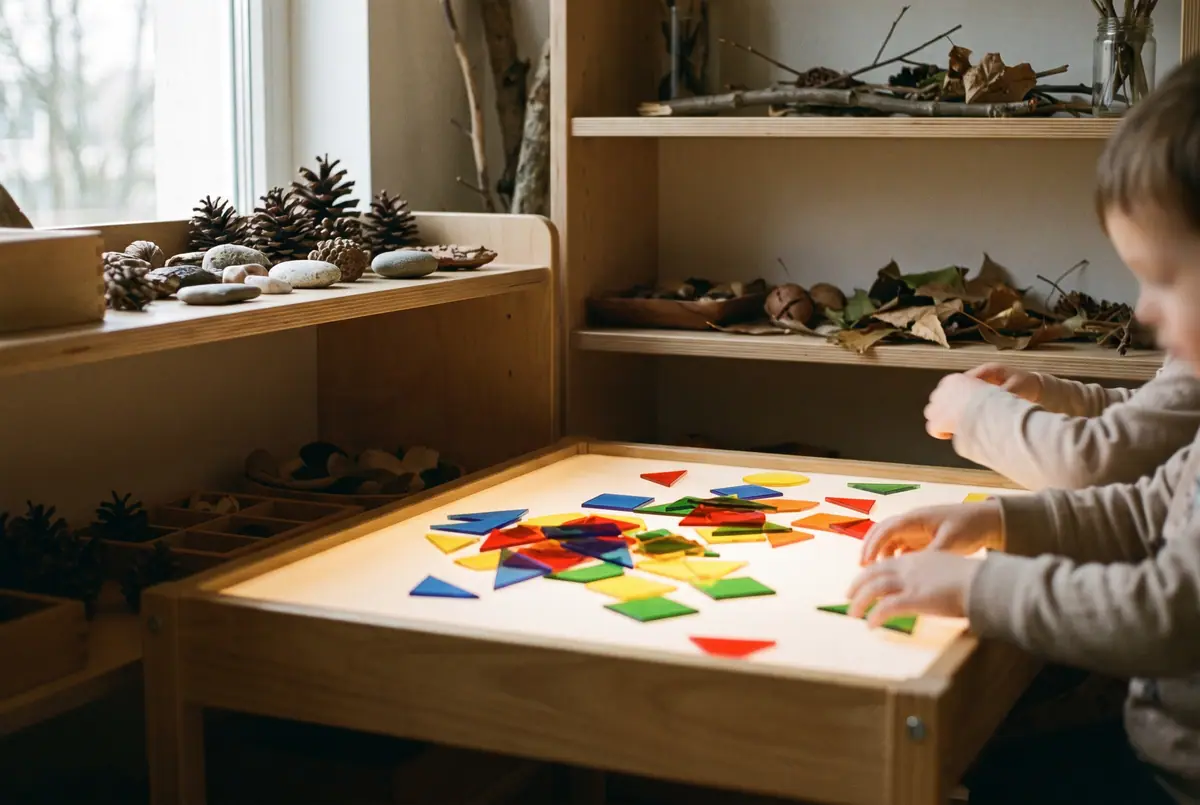
What this actually looks like
Projects that last
A project runs for as long as the children stay interested — sometimes a fortnight, sometimes a term. Nothing is on a calendar, and nothing is themed by month.
The atelier
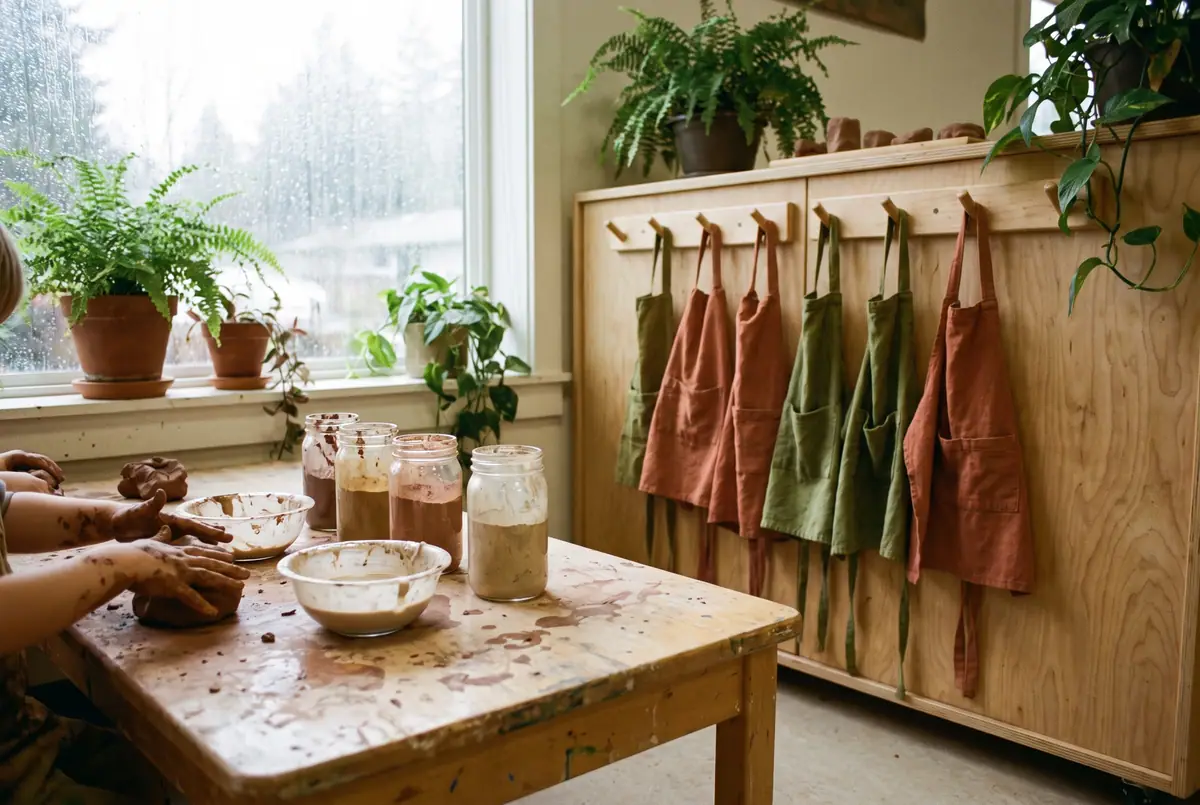
A shared studio with wire, clay, paint, light, wood and a great deal of paper. The atelierista works across Preschool and Pre-K and is a trained artist, not a craft supervisor.
Documentation
Photographs, transcripts of what children actually said, and their drawings, put up on the wall at their eye height as well as yours. It is how children revisit their own thinking, and how you find out what they did all day.
Early literacy in context
Children write because they need to label a thing, sign up for a turn, or send a message. There are no worksheets and no letter of the week. There are a very large number of books.
A day in preschool
- 7:30 – 8:45Arrival, breakfast, and the first look at the provocation.
- 9:00Morning meeting: what is happening today, and who is working on what.
- 9:20 – 11:00Project work and open studio. The longest block of the day.
- 11:00Outside — the garden, the big yard, or a walk.
- 12:15Lunch, served family-style.
- 1:00 – 2:15Rest, then quiet work for children who no longer sleep.
- 2:30 – 5:30Snack, outside, studio open, stories.
Materials in this room
- Wire, clay, wood offcuts, fabric, paper of many weights
- A light table and an overhead projector
- Real tools — hand drills, saws with supervision, hammers
- Clipboards, mark-making materials, a message board
- Magnifiers, scales, measuring tapes, a very old typewriter
Moving on
Children move to Pre-K the September before their kindergarten year.
See the preschool room with children in it
Tours run Tuesday and Thursday at 9:30am, while the rooms are full and working. We do not tour on a quiet afternoon, because a quiet afternoon tells you nothing.