The Infant Room
Six infants, two educators, one room that never gets loud.
- Meadow ratio
- 1 : 3
- 1 educator to 3 infants
- Group size
- 6
- children, maximum
- Oregon maximum
- 1 : 4
- group of 8, certified centers
- Staffing
- 2 educators, one of whom is the room lead
Regulatory — never recoloured
Infancy is not a curriculum. It is a relationship, repeated: being picked up by the person who picked you up yesterday, being fed when you are hungry rather than when the clock says, being put down to sleep in a way that is the same every single time.
So the infant room is built around continuity rather than activity. Each infant has a primary educator who does their feeding, their nappy changes and their sleep, and who writes their day. Six infants and two educators means that person is genuinely available — not managing a queue.
Babies here follow their own schedules, not the room’s. We ask families to write down what home looks like — how long they sleep, how they are held, what a hungry cry sounds like versus a tired one — and we follow it, then tell you what actually happened.
What this actually looks like
Sleep on their own schedule
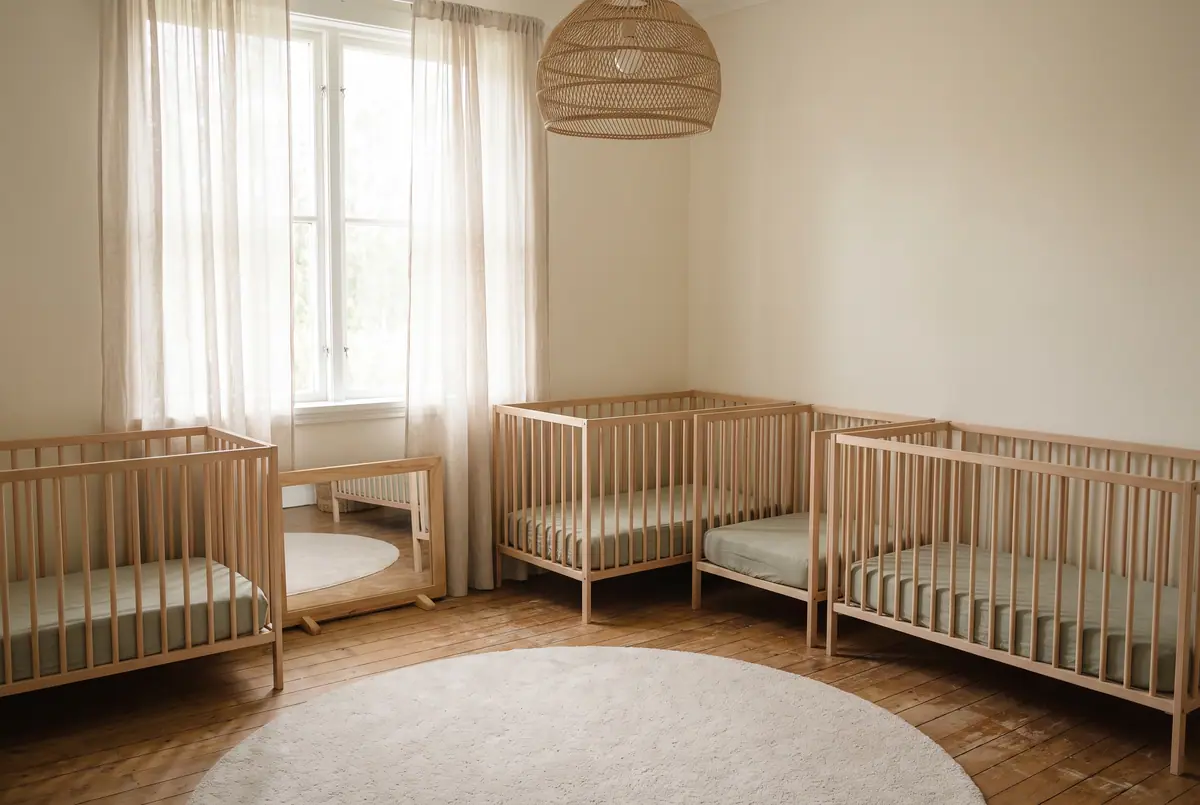
Infants sleep when they are tired. Every sleep is in the child’s own crib, on their back, on a firm mattress with a fitted sheet and nothing else in the crib — no bumpers, blankets, pillows, positioners or soft toys. Sleeping infants are within sight and hearing of an educator at all times, and are checked and logged at least every fifteen minutes.
Floor time, not container time
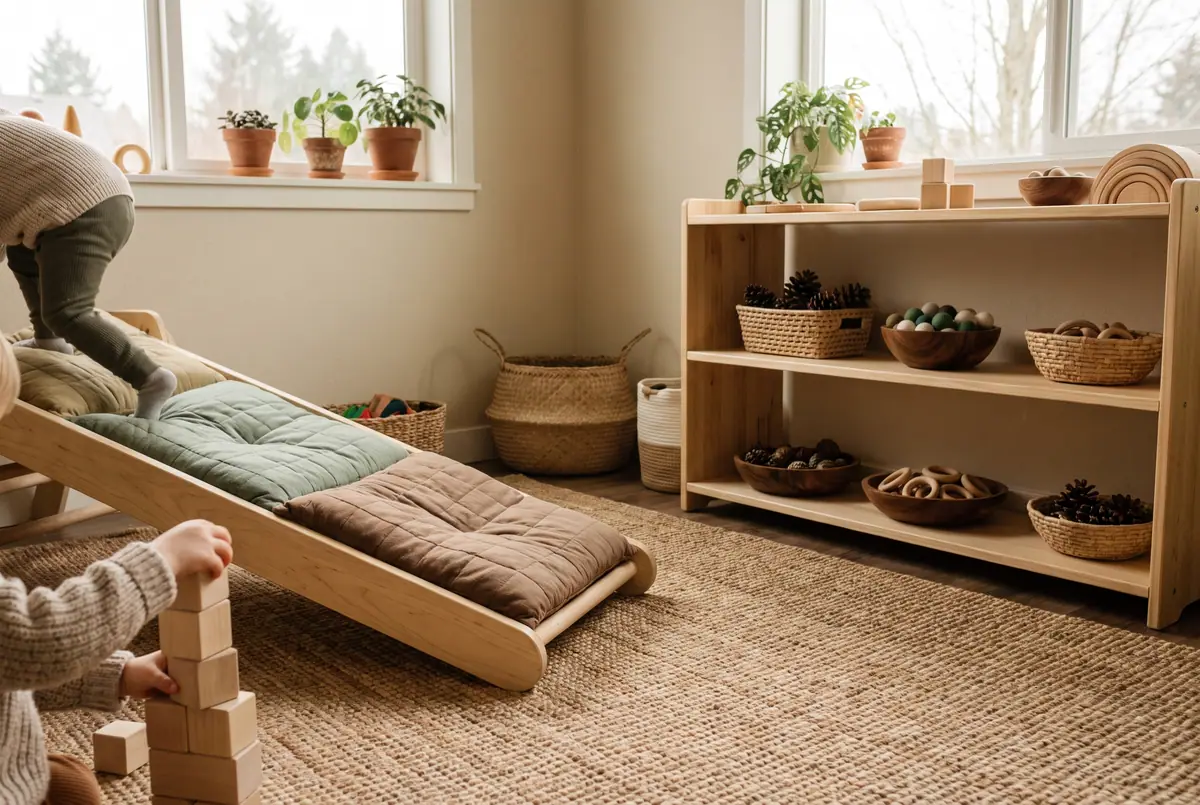
No bouncers, jumpers or screens. Infants spend their waking time on the floor on firm surfaces, with low mirrors, treasure baskets of safe natural objects and an educator at their level. Tummy time happens several times a day for infants who can tolerate it.
Feeding as it comes
Expressed breast milk and formula are labelled with the child’s name and the date, stored separately in a dedicated refrigerator, and never shared between children. Bottles are held, never propped. Solids are introduced only on a written plan agreed with you.
Outside every day
Infants go outside daily unless the air quality index is unhealthy or conditions are unsafe. Often that is a walk in the pram under the maple; sometimes it is a blanket on the grass under the fruit trees.
A day in infants
- On arrivalA handover at the door: how the night went, when they last fed.
- Through the morningFloor play, feeds and sleeps, each on the child’s own clock.
- Late morningOutside — pram, blanket, or the covered deck if it is raining hard.
- AfternoonThe longer sleep for most; quiet one-to-one time for whoever is awake.
- PickupA written day sheet: feeds, sleeps, changes, and one thing they did.
Materials in this room
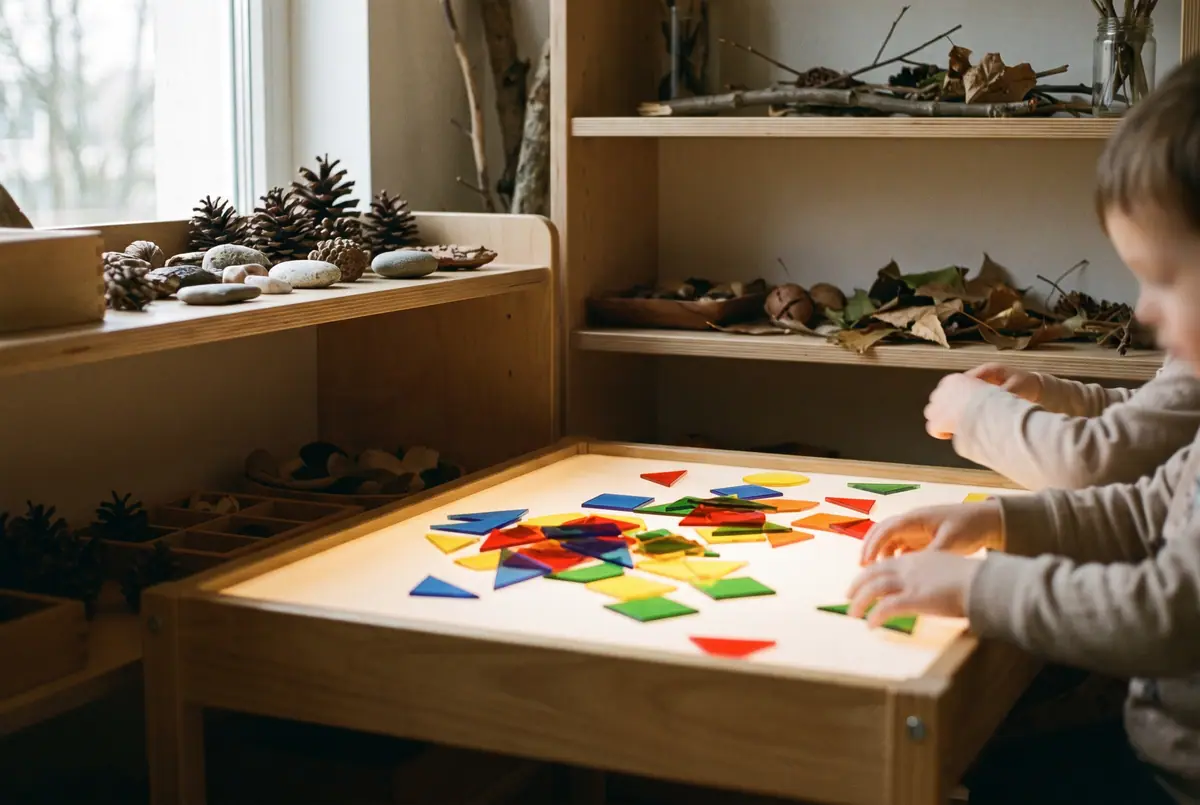
- Treasure baskets — wooden rings, natural sponges, cotton reels, brushes
- Low mirrors at floor level and a wooden pull-up bar
- Woollen and cotton textures, no plastic rattles
- A single, deliberately unremarkable room — nothing flashing, nothing musical, nothing that needs batteries
Moving on
Infants move up around their first birthday, but readiness leads and the date follows. The move takes about three weeks: visits to the toddler room with their own educator first, then a morning, then a full day.
See the infants room with children in it
Tours run Tuesday and Thursday at 9:30am, while the rooms are full and working. We do not tour on a quiet afternoon, because a quiet afternoon tells you nothing.